Buying Off-Plan Property in Oman: The Complete 2026 Guide
Everything a buyer should check before reserving an off-plan home in Oman — from the 2026 property laws and escrow accounts to payment plans, handover and title registration.

Buying a home before it is built can make sense in Oman: off-plan prices are usually paid in stages, many of the newest freehold communities are only available off-plan, and the law that governs these sales was rewritten in 2025–2026. It can also go wrong if you pay the wrong company, sign a contract you have not read, or assume that the rules you know from Dubai apply in Muscat.
This guide explains how off-plan buying works in Oman today: who may buy and where, what the new Law Regulating Real Estate (Royal Decree 79/2025) and the Real Estate Register Law (Royal Decree 56/2026) change, how escrow protects your money — and where it does not — and the checks to make before you pay a reservation fee. New to buying in Oman? Start with our step-by-step guide to buying property in Oman. For a dated record of each legal change, see the Oman property law changes timeline.
- 3%registration fee, paid by the buyer [8]
- 5%of each sale kept in escrow for a year after registration [4]
- 3licences and permits before a project may be sold [2]
- Mar 2026new Law Regulating Real Estate in force [1]
What is off-plan property in Oman?
An off-plan property is a unit you buy from a developer before construction is finished — sometimes before it has started. You sign a sale contract for a defined unit (floor, area, layout and specification), pay part of the price during construction and the balance at or after handover, and receive title once the unit is completed and registered.
In Oman, most off-plan homes open to foreign buyers are in Integrated Tourism Complexes (ITCs) such as Al Mouj Muscat, Muscat Hills, Muscat Bay, Yiti and Jebel Sifah, and in government-backed integrated neighbourhoods such as Sultan Haitham City. A ready (completed) property, by contrast, can be inspected and transferred straight away.
Why buyers choose off-plan
- Staged payments. Instead of paying the full price at once, you pay a deposit and instalments linked to construction or dates; some developers spread part of the price over several years after handover.
- Choice of unit. Early buyers can usually pick the floor, view and layout before the best units are sold.
- New stock. A large share of new homes in Muscat's freehold communities is only available off-plan.
- Modern specification. New buildings are designed to current codes, with up-to-date layouts and shared facilities.
The trade-offs are just as real: you cannot see the finished home, completion can slip, the money you pay is committed for years, and the final product depends on how well the developer delivers. The rest of this guide is about managing those risks.
Off-plan vs ready property
| Off-plan | Ready | |
|---|---|---|
| What you buy | A unit described in plans and the contract | A finished unit you can inspect |
| Payment | Deposit + instalments during construction; sometimes after handover | Usually the full price at transfer (cash or mortgage) |
| Main protection | Project escrow account, licensing and the sale contract | Inspection, title search and transfer at the registry |
| When you own it | Recorded in the Preliminary Register; title deed after completion | Title deed issued on transfer |
| Main risks | Delay, specification changes, developer performance | Hidden defects, condition, service-charge history |
| Rental income | None until handover | Can start immediately |
| Residency | Possible on unregistered property under 2026 rules [10] | Owner residence on the registered unit [11] |
See our off-plan listings and ready properties to compare real units side by side.
Quick self-check
Is off-plan right for you?
Tick the statements that describe you.
Can foreigners buy off-plan property in Oman?
Yes, in designated places. The main route for non-Omanis is the ITC framework (Royal Decree 12/2006 and its executive regulation), which lets foreigners own built units or plots inside licensed complexes, for living or investment [6][7]. Outside ITCs, Royal Decree 29/2018 lists places where non-Omanis may not own land or property, and agricultural land stays closed to them.
The new Real Estate Register Law allows property to be registered in the names of non-Omani individuals and companies, but expressly “subject to the laws regulating non-Omani ownership” — so it does not by itself open every area [5]. Some government-backed neighbourhoods, such as Sultan Haitham City and designated Suroh projects, also sell to foreigners in specific projects. Always confirm, in writing, that the exact unit is eligible for a non-Omani buyer and what title you will receive.
GCC citizens are treated much like Omanis for most property purposes, but restricted locations still apply. Read our foreign ownership guide for the full picture.
Integrated Tourism Complexes and freehold ownership
ITCs are licensed master-planned communities. Inside them, non-Omanis can hold freehold title to apartments, villas and plots, register them in their own name, sell, lease or mortgage them, and pass them on [6]. Two practical exceptions matter:
- Musandam: in ITCs in Musandam, non-Omanis may acquire only completed units, on a usufruct (right of use) of up to 99 years, not freehold [7].
- Plots: an owner of an ITC plot must build within four years of registration (extendable by up to two years), and an undeveloped plot cannot be sold before completion except to mortgage it for the construction [7].
Freehold and usufruct are different legal rights with different resale and inheritance consequences. Our freehold property guide explains which communities sell freehold homes.
Oman's off-plan property law in 2026
Royal Decree 79/2025 issued and published in the Official Gazette [1]
Law Regulating Real Estate in force; 2018 escrow system repealed [1]
Real Estate Register Law in force, with a Preliminary Register for off-plan units [5]
ROP Decision 87/2026: sponsor-free visas for property owners [10]
Executive regulation of Law 79/2025 due [1]
The Law Regulating Real Estate (Royal Decree 79/2025)
Issued on 10 September 2025 and published in the Official Gazette on 14 September 2025, Royal Decree 79/2025 brings real estate development, off-plan sales, brokerage, valuation, jointly owned property and escrow accounts under one law supervised by MoHUP [1][2]. It came into force 180 days after publication, in March 2026, and repealed three older instruments: the brokerage law (RD 78/86), the apartments and floors ownership system (RD 48/89) and the escrow system for real estate development projects (RD 30/2018) [1].
The Minister of Housing and Urban Planning has one year from the law's entry into force to issue its executive regulation. Until then, existing regulations and decisions continue to apply where they do not conflict with the new law [1]. In practice this means some detailed escrow rules issued in 2019 may still be applied during the transition — ask the developer which rules govern your project.
According to legal commentary on the law, it also requires each project to have an owners' association to manage common areas, requires brokers and marketers to be licensed, and gave developers six months from the effective date to register off-plan units already sold [14].
The Real Estate Register Law (Royal Decree 56/2026)
In force since 18 May 2026, this law replaced the 1998 registry system. Most importantly for off-plan buyers, it creates a Preliminary Real Estate Register in which ownership rights in off-plan units — and later dispositions such as transfers or mortgages — can be recorded with the same legal weight as entries in the main register [5]. The title deed remains the only accepted proof of final ownership.
Developer and project licensing
MoHUP describes a three-stage process that must be completed before a project is advertised or sold [2]:
- Real estate development licence — authorises the company to work as a developer in Oman.
- Project licence — a separate licence for each project, which requires an escrow account at a local bank before off-plan units can be sold.
- Advertising and marketing permit — needed before the project is promoted in the media, online or at exhibitions.
The government service for the project licence lists the documents a developer must provide — title deed or usufruct contract, initial approval, maps, the off-plan sale contract, the consultant agreement, an implementation plan and a land valuation — and a guarantee account equal to 20% of the project value or the land value [3]. MoHUP's Director-General of Real Estate Development has urged buyers to confirm that both the developer and the project are registered and licensed before paying or signing [2]. For a document-by-document verification process, see our guide to checking an off-plan project before you pay.
Projects in special economic zones and free zones (for example Duqm) follow a separate regime: since 2026 developers there must reach 20% of the project cost before marketing off-plan units [13]. That threshold is not the rule for Muscat ITCs.
Escrow accounts and buyer protection
Escrow is the core protection for off-plan money in Oman. The rules that applied under the 2018 escrow system and its 2019 implementing regulation were [4]:
- a separate escrow account for each project, opened in the project's name with a local bank;
- buyers' payments — and any construction finance — paid into that account;
- withdrawals only on requests certified by the project consultant against construction progress;
- 5% of each unit's sale value retained for one year after the unit is registered in the buyer's name, to cover defects;
- advertising paid from buyer money capped at 3% of deposits, with ministry approval.
Under the 2025 law the escrow account remains mandatory: no off-plan sale may take place until the project's escrow account has been opened, and breaches are punishable [2]. The detailed percentages will be confirmed by the new executive regulation.
Step-by-step: how to buy off-plan in Oman
Shortlist area and project
Compare communities, developers and handover dates. Our property prices guide shows current price levels by area.
Verify licences and eligibility
Ask for the developer licence, project licence and marketing permit, and confirm in writing that a non-Omani may own the specific unit.
Review the documents
Get the reservation form, draft sale contract, payment schedule, floor plan, specification and escrow details before paying.
Reserve
Pay the reservation amount only into the account named in the contract — ideally the project escrow account.
Sign the sale contract (SPA)
Sign once a lawyer has reviewed it. Make sure the sale is recorded in the Preliminary Real Estate Register [5].
Pay instalments and follow construction
Pay against the schedule, keep every receipt, and ask for progress reports and site visits.
Inspect and take handover
Inspect (snag) the unit, list defects in writing, and settle the final payment as the contract requires.
Register title and settle in
Register the completed unit and receive the title deed; then set up utilities and the owners' association account.
Documents to review before you pay
- Developer's commercial registration and real estate development licence
- Project licence and advertising/marketing permit from MoHUP
- Escrow account details: bank, account name in the project's name
- Reservation form, with refund and cancellation terms
- Draft sale and purchase agreement (SPA)
- Payment schedule with dates or construction milestones
- Floor plan, unit area (and how it is measured), floor and view
- Specification and finishes schedule
- Master plan and approved building permit details
- Confirmation of ITC status or other foreign-ownership eligibility
- Estimated service charges and owners' association rules
- Handover procedure and defects-liability terms
Reservation agreements and sale contracts
The reservation form holds a unit for a short period against a fee; the sale and purchase agreement (SPA) is the contract that matters. Read both carefully — especially these clauses:
- Unit definition: exact unit number, area, floor, parking and storage; the tolerance allowed if the final area differs, and whether the price is adjusted.
- Completion date: the expected handover date, any grace period, and what compensation or termination right you have if it is exceeded.
- Your obligations: payment dates, late-payment charges, and what happens to amounts paid if you default.
- Changes: whether the developer may change the design, materials or facilities, and within what limits.
- Transfer before completion: whether you may resell or assign the contract before handover, and any fee or consent required.
- Disputes: governing law (Omani law) and the court or arbitration forum.
Treat anything promised in a brochure or by a salesperson, but missing from the contract, as not promised.
Payment plans explained
Oman has no single legal payment schedule; each developer sets its own plan, approved as part of the project. Plans published by developers on Homelist include, for example [16]:
| Project (area) | Booking | During construction | On handover | After handover |
|---|---|---|---|---|
| Azura IV (Al Mouj) | 10% | 75% | 15% | — |
| Sky Park (Al Mouj) | 28% | 64% | 8% | — |
| AIDA (Yiti) | 30% | 30% | 40% | — |
| The Sustainable City (Yiti) | 5% | 15% | 30% | 50% over 5 years |
For a project-by-project comparison, post-handover plans and the late-payment clauses to check, see our guide to off-plan payment plans in Oman.
Illustrative example only: on a hypothetical OMR 100,000 apartment with a 10 / 75 / 15 plan, you would pay OMR 10,000 at booking, OMR 75,000 in instalments during construction and OMR 15,000 at handover — plus the 3% registration fee (OMR 3,000) when title is registered [8]. A post-handover plan lowers the cash needed before completion but leaves you paying instalments after you receive the keys.
Interactive tool
Payment plan calculator
Enter a price and pick a published plan to see what you would pay at each stage.
Illustration only. Plans change and can differ by unit; VAT and service charges are not included.
Some Omani banks finance off-plan homes for expatriates in approved ITC projects. In August 2026, for example, BankDhofar announced loans of up to 70% of the property value, capped at OMR 350,000, over up to 20 years [15]. Terms vary by bank and borrower.
How to evaluate a developer
- Licensing: the company and the project are licensed by MoHUP, and the selling entity is the one named in the contract [2].
- Track record: completed, occupied buildings — visit them and compare the finished result with the original brochure.
- Delivery history: how close earlier projects came to their promised handover dates.
- Financial strength: who stands behind the project (master developer, investors, lenders) and whether construction is already under way.
- Contractor and consultant: named, reputable firms; the consultant certifies escrow withdrawals [4].
- After-sales: how defects are handled and how the community is managed after handover.
Browse developer profiles on Homelist to see the projects each company is selling.
Construction progress and handover
Ask for periodic construction updates and visit the site when you can. Expected handover dates are estimates set by developers — Homelist shows the developer's stated date on each listing — and delays happen, so check what your contract says about extensions.
At handover, inspect the unit with the specification in hand, record every defect in a signed snagging list, test plumbing, electrics and air-conditioning, and confirm that common areas and access are complete. Under the 2019 escrow rules, 5% of the sale value stays in escrow for a year after registration to cover defects [4] — another reason to report issues promptly and in writing.
Registration and title
Your off-plan purchase can be recorded in the Preliminary Real Estate Register from the point of sale, and the completed unit is then registered in the main register, where the title deed is issued [5]. The registration fee is 3% of the property value, paid by the buyer [8]; VAT may also apply to a developer's first sale of a new home, so check how it is treated in your contract [9]. The title deed is the only accepted proof of ownership, so check the property record for any annotation (such as a mortgage or litigation) before completing [5]. How VAT falls on each instalment, and which developer charges the law restricts, is explained in our property buying costs guide.
Residency when you buy off-plan
Ownership and residency are separate decisions made by different authorities. Buying property does not automatically give you a residence permit; it can make you eligible to apply.
- Owner residence (ITC): non-Omani owners of completed ITC units can obtain a renewable residence for themselves and first-degree relatives, usually issued for two years [7][11].
- Off-plan and unregistered property: Royal Oman Police Decision 87/2026 (in force June 2026) introduced sponsor-free visas for property owners, including owners of property that has not completed registration; visas linked to unregistered property run from six months to one year and can be renewed [10].
- Sultan Haitham City and Suroh projects: buyers who have paid at least 30% of the price can apply for a two-year renewable residence.
- Golden Residency: a qualifying property investment from OMR 200,000 can support a 10-year residence [12].
Permits end if the property is sold [10]. Read more in the residency section of our Invest guide. Compare every route in our guide to Oman residency through property.
Risks of buying off-plan
| Risk | What can happen | How to reduce it |
|---|---|---|
| Delay | Handover later than promised | Check delivery history; read extension and compensation clauses |
| Changes | Layout, finishes or facilities differ | Detailed specification and change limits in the SPA |
| Developer failure | Project stalls | Licensed project, escrow account, construction already started |
| Market | Prices or rents lower than expected at completion | Buy for the long term; compare with ready-unit prices |
| Liquidity | Hard to resell before handover | Check assignment rules and fees before signing |
| Costs | Fees, VAT and service charges higher than planned | Budget them in advance; ask for a service-charge estimate |
| Eligibility | Unit not open to non-Omani ownership | Written confirmation of ITC status or other eligibility |
Homelist does not promise capital growth or rental returns. Market data helps with context — the value of real estate transactions in Oman rose 5.4% to RO 1.434 billion in the first half of 2026, with foreign real estate investment transactions above RO 60 million [2] — but past figures say nothing certain about a specific unit.
Where to find off-plan projects in Oman
Most off-plan activity open to foreign buyers is in Muscat's ITCs — Al Mouj, Yiti, Muscat Hills, Muscat Bay and Jebel Sifah — and in Sultan Haitham City, with resort projects such as Hawana in Salalah. Examples of projects currently listed on Homelist, with the developer's stated handover:
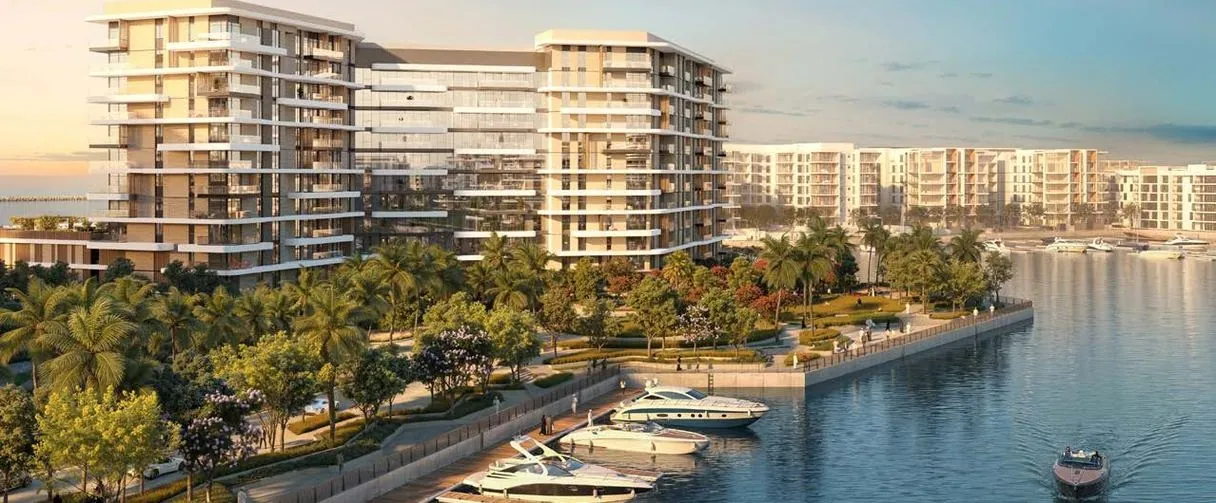
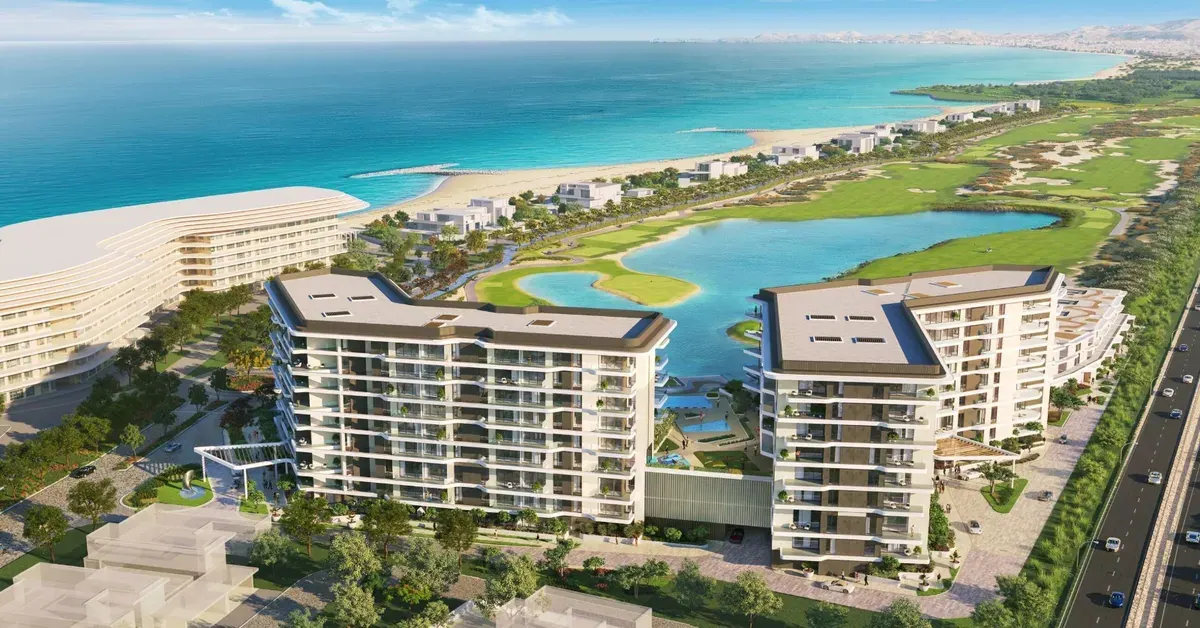

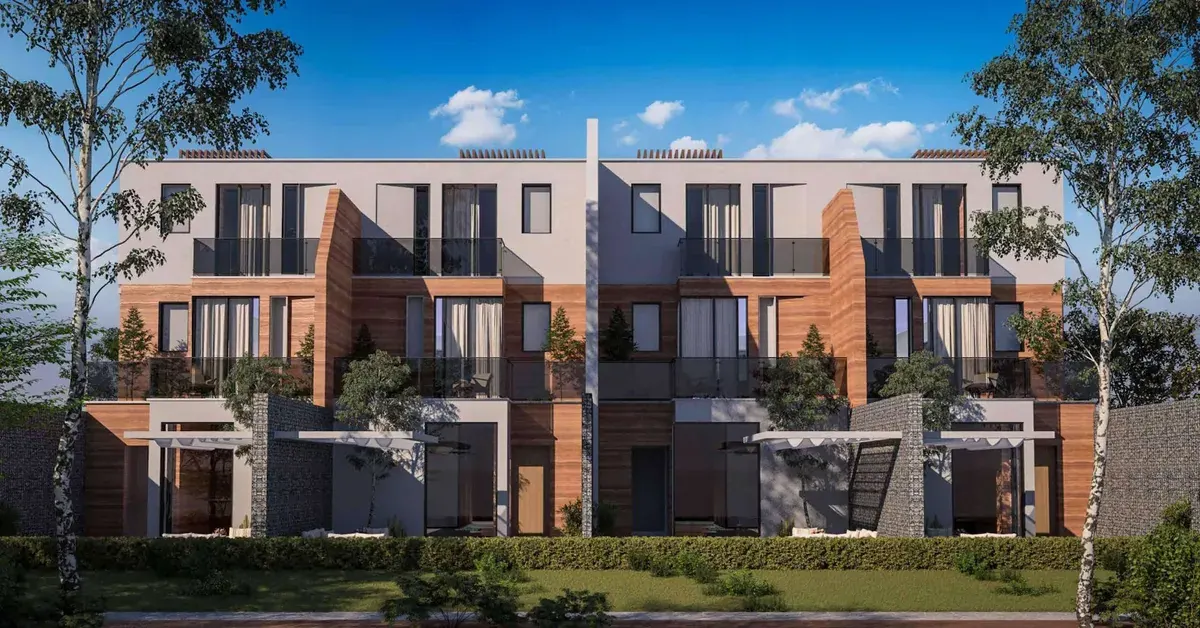
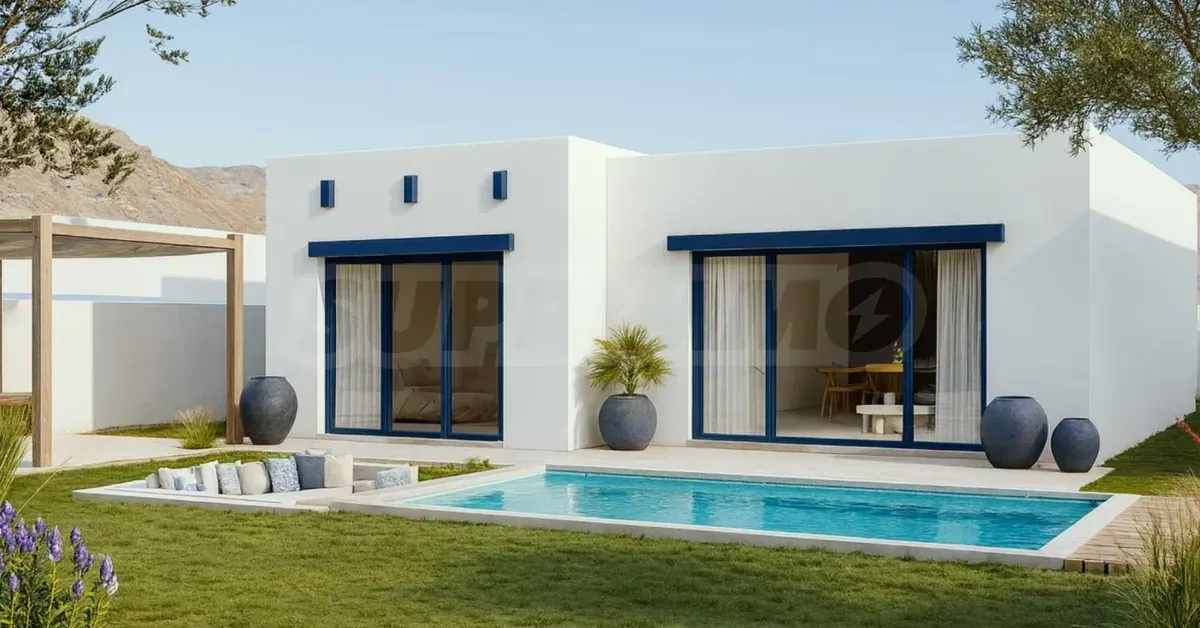
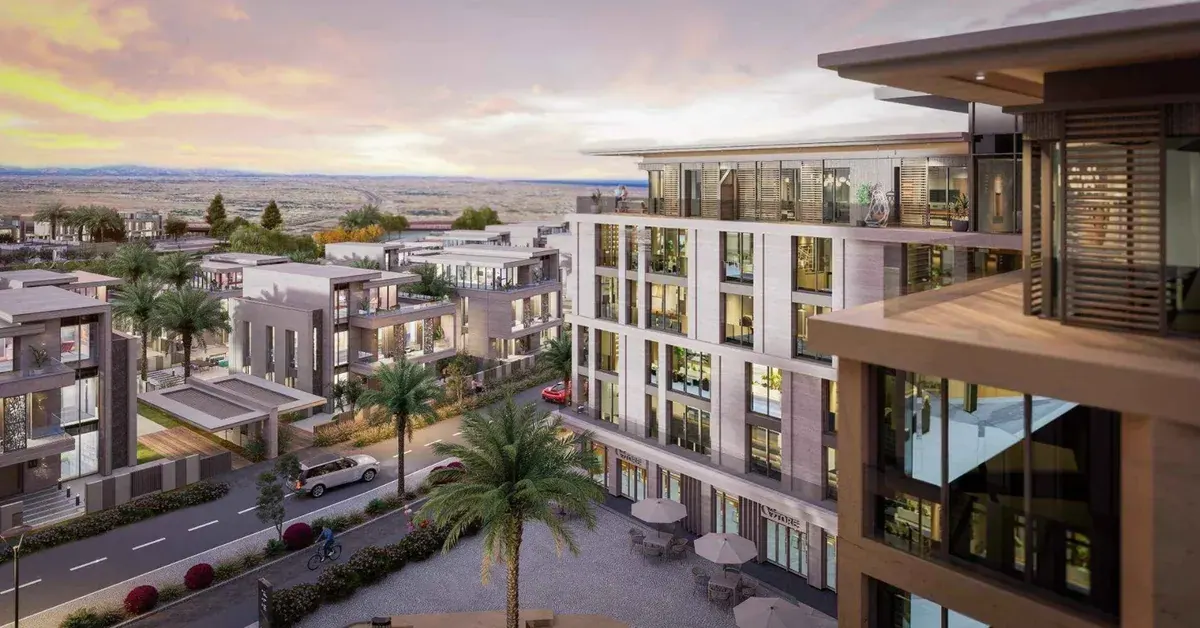
Sarooj Construction
Sarooj Oasis, Sultan Haitham City
Sultan Haitham City, Muscat
- Handover
- 2028
Project details, handover dates and payment plans come from developer materials and can change; use them as a starting point and confirm with the developer. See all projects. For launches and handover dates checked against dated sources, see new real estate projects in Oman 2026–2027.
Due-diligence checklist before you pay
Your ticks are saved in this browser only.
Homelist can help you shortlist projects, request licence and escrow details from developers, and compare payment plans. Talk to our team or message us on WhatsApp.
Not sure whether to wait for keys? Read off-plan vs ready property in Oman, with a cash-flow model that puts the same budget in both routes.
If you are weighing the phases of one project, read early phase off plan in Oman vs the final phase, with real Azura and Juman phase examples as ranges.
Frequently asked questions
Is it safe to buy off-plan property in Oman?
It can be, if the developer and project are licensed by the Ministry of Housing and Urban Planning, your money goes into the project's escrow account and a lawyer reviews the contract. Escrow controls how funds are used, but it does not guarantee the completion date or the final product.
Can foreigners buy off-plan property in Oman?
Yes, mainly inside licensed Integrated Tourism Complexes such as Al Mouj, Muscat Hills, Muscat Bay, Yiti and Jebel Sifah, and in designated projects such as Sultan Haitham City. Confirm in writing that the specific unit is open to non-Omani ownership.
What changed with Royal Decree 79/2025?
It placed development, off-plan sales, brokerage, valuation, jointly owned property and escrow accounts under one law supervised by the Ministry of Housing and Urban Planning, in force since March 2026. It repealed the 2018 escrow system; its executive regulation is due within one year of entry into force.
How much deposit do I need for an off-plan property?
There is no fixed legal amount. Developer plans listed on Homelist ask for between 5% and 30% at booking, with the rest during construction, at handover or after handover.
Are there post-handover payment plans in Oman?
Yes, some developers offer them. For example, the published plan for The Sustainable City Yiti spreads 50% of the price over five years after handover.
What fees do I pay when buying off-plan?
The buyer pays a 3% registration fee on the property value. VAT may apply to a developer's first sale of a new home, and you should budget for annual service charges once the community is handed over.
Do I get residency if I buy off-plan?
You may be eligible to apply. Since June 2026, owners of property that has not completed registration can obtain renewable sponsor-free visas of six months to one year, and owners of completed ITC units can apply for a renewable owner residence. Approval rests with the authorities.
What happens if the project is delayed?
Your remedies depend on the contract: check the grace period, any compensation for late delivery and when you may terminate and recover payments. Funds in escrow are released only against certified progress.
Last fact-check: Laws and project data checked on 10 November 2026. Rules change — confirm the current position for your unit before you pay.
This guide is general information, not legal or financial advice. Have a qualified Omani lawyer review your reservation form and sale contract.
Sources and legal references
- Royal Decree 79/2025 issuing the Law Regulating Real Estate (Official Gazette 1613, 14 Sep 2025) — decree.om
- Oman Observer (25 Jul 2026) — Oman reinforces property market rules (Ministry of Housing and Urban Planning)
- Gov.om / Ministry of Housing and Urban Planning — Get real estate development project license
- Trowers & Hamlins (Jun 2023) — Escrow laws in the Sultanate of Oman (RD 30/2018, MD 72/2019)
- Trowers & Hamlins (Jul 2026) — Oman's new Real Estate Register Law (RD 56/2026)
- Gov.om / Ministry of Housing and Urban Planning — Own real estate in tourist complexes
- Times of Oman (Jul 2026) — Legal framework governing foreign ownership in Oman's ITCs
- Oman Observer (Nov 2020) — Real estate registration fee reduced from 5% to 3%
- Oman Tax Authority — VAT Taxpayer Guide: Real Estate
- Gulf News (Jun 2026) — Royal Oman Police Decision 87/2026: sponsor-free visas for property owners
- Gov.om / Royal Oman Police — Residence visa for property owners
- Sultanate of Oman — Golden Residency programme
- Oman Observer (21 Sep 2026) — Oman sets 20% threshold for off-plan marketing (special economic and free zones)
- BSA Law — Real Estate Regulation Law 79/2025: commentary
- BankDhofar (Aug 2026) — Housing loans for expatriates, including off-plan ITC units
- Homelist project pages — payment plans and handover dates published by developers (Nov 2026)