Oman Real Estate Market Outlook 2027: Data, Drivers and Three Scenarios
What the 2026 data says, how the economy, interest rates, new supply, tourism and new rules could shape Oman's property market in 2027, three scenarios with the signals to watch, and where new homes are due.

In short: Oman's property market goes into 2027 with higher-value sales on a flat number of deals, land-led price gains up to mid-2026, flat official rents and a central bank that raised rates in September [1][2][3][4]. What happens next depends on five forces: the economy and the regional conflict, interest rates, a large wave of new supply, the tourism recovery and new rules. This outlook does not predict prices. It sets out three scenarios, the conditions behind each and the data that will show which one is unfolding — and it is updated every month as new figures arrive.
- Last verified
- 17 Nov 2026
- Transactions data to
- 30 Sep 2026
- Updated
- Monthly, same address
- Sources
- 17 references
Where Oman's property market stands going into 2027
Registered transactions reached OMR 2,331.5 million in the first nine months of 2026, 0.7% less than a year earlier. Underneath that flat total, the value of sale contracts rose 15.9% while their number was almost unchanged, and the number of mortgage contracts grew 22.1% [1][17]. The official price index rose 22.7% in the year to Q2 2026, driven mainly by residential land [2].
| Indicator | Latest | Change | Period and source |
|---|---|---|---|
| Total traded value | OMR 2,331.5m | −0.7% year on year | Jan–Sep 2026 [1][17] |
| Sale contracts, value | OMR 1,076m | +15.9% | Jan–Sep 2026 [1] |
| Sale contracts, number | 50,069 | −0.2% | Jan–Sep 2026 [1] |
| Mortgage contracts, number | 20,059 | +22.1% | Jan–Sep 2026 [1] |
| Real Estate Price Index (2018 = 100) | 129.9 | +22.7% year on year | Q2 2026 [2] |
| Central Bank of Oman repo rate | 4.50% | +0.25 points, first rise since 2023 | From 17 Sep 2026 [4] |
- Overall
- Residential
- Commercial
Source: NCSI, Real Estate Price Inflation Report, Q2 2026 (provisional) [2]. The Q3 2026 edition had not been published on 17 November 2026.
Two cautions matter for 2027. The index is weighted towards land, so it is not a measure of home prices; and the official housing component of consumer prices was flat, rising 0.1% year on year in October 2026 [3]. Our reading, which is interpretation rather than a published finding, is that demand has been shifting towards higher-value deals rather than growing in volume.
The five forces that will shape 2027
Each force below is described from published data or attributed statements. Where we add our own reading, we say so.
1. The economy and the regional conflict
In June 2026 the IMF projected Oman's growth at about 3.7% in 2026 and 3% in 2027, with non-oil growth slowing to 2.5% in 2026 "reflecting the impact of the regional conflict on tourism and construction" before recovering to 3.2% in 2027; it named a prolonged escalation of the war in the Middle East as the main downside risk [5]. In its October 2026 regional outlook the IMF raised Oman's 2026 growth to 4.1% and noted that Oman had not been affected by the disruption to the Strait of Hormuz, while projecting a 4.8% contraction for the GCC as a whole in 2026 and a 9.1% rebound in 2027 — on the assumption that disruption lasts through the first quarter of 2027 and hostilities then end [6].
2. Interest rates and credit
The Central Bank of Oman raised its repo rate by 0.25 points to 4.5% from 17 September 2026, its first increase since 2023 [4]. Bank credit was still growing quickly — total loans and financing were up 13.8% in a year to August 2026 — and the average interest rate on credit was 5.323%, lower than a year earlier [1]. For buyers using a mortgage, the question for 2027 is whether lending rates follow the policy rate up.
3. New supply: a pipeline at a record
Savills' head of Oman described integrated tourism complex (ITC) developments as being "at an all-time high", with more launches expected in 2026 and 2027 and developers offering longer payment plans and incentives; he added that it is too early to know how supply and demand will line up [7]. Oman publishes no official count of homes under construction, so we use our own project database: of the off-plan projects listed on Homelist, developers announce handover in 2027 for six and in 2028 for six more [8].
Source: Homelist project database, 17 November 2026 [8]. A listing database, not a census of national supply; announced dates can slip.
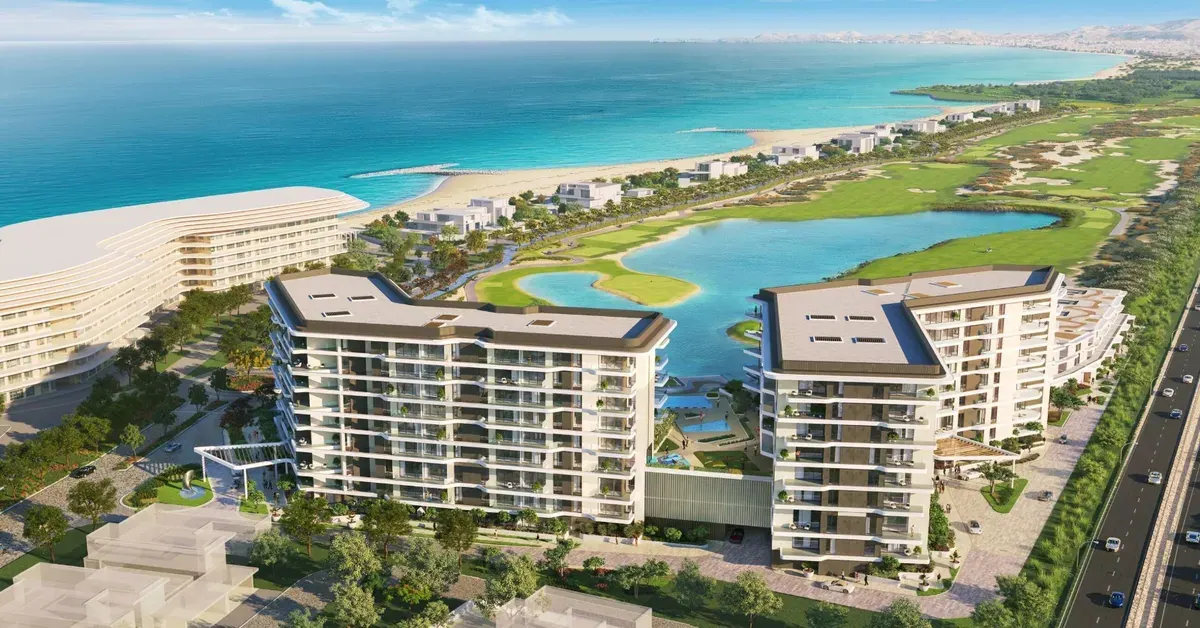
Beyond our listings, the first residents of Sultan Haitham City were expected in the Hay Al Wafaa district by the end of 2026 [9], agreements worth about OMR 1 billion were signed at the Urban October exhibition in October 2026 [11], and Cavendish Maxwell expects about 1,500 new hotel rooms in 2027 and 1,600 in 2028 [10]. Our reading: completions in Al Mouj, Muscat Bay and Yiti during 2027 will add rental supply in exactly the prime communities where agency-reported rents have been firmest.
4. Tourism and short-stay demand
Tourism took the clearest hit from the regional conflict. Hotel occupancy averaged 46.5% to the end of September 2026 [12], and Cavendish Maxwell reported that occupancy fell sharply from March after about 70% in January and February [10]. Oman received about 2.5 million visitors in January–August 2026, roughly level with 2025, and entered its October–March peak season with "cautious optimism", while flight disruptions were still weighing on advance bookings [12]. For investors relying on holiday-let income, 2027 depends on whether that recovery takes hold.
5. New rules and tax
Three legal changes run into 2027 and beyond. The executive regulation of the Real Estate Regulation Law (Royal Decree 79/2025), which will set remedies under off-plan contracts, is due within one year of the law coming into force in March 2026 [13]. The Real Estate Register Law (Royal Decree 56/2026) has applied since 18 May 2026 [14]. Royal Oman Police Decision 87/2026 introduced a sponsor-free residence option for foreign property owners [15]. And a personal income tax of 5% on individuals earning more than OMR 42,000 a year, issued by Royal Decree 56/2025, takes effect on 1 January 2028 [16].
Three scenarios for Oman's property market in 2027
The table shows three ways 2027 could unfold. Each column on conditions draws on the sources above; the effects are our interpretation, and none of them is a price forecast.
| Scenario | What would have to happen | What it would likely mean | Signals to watch |
|---|---|---|---|
| Base case | Regional disruption ends after the first quarter of 2027, as the IMF assumes [6]; growth near the IMF's 3% projection [5]; lending rates stay close to current levels [4] | Sale values keep shifting towards higher-value deals; 2027 handovers add rental supply and prime rents level off; off-plan sales continue with longer payment plans [7] | Monthly NCSI sale-contract counts and values [1]; Q3 and Q4 price index [2] |
| Stronger | Hostilities end early in 2027 and tourism recovers in the peak season [12]; the new residence routes draw more foreign buyers [15] | More sale contracts as well as higher values; faster take-up of new launches; short-stay income closer to pre-2026 levels | Hotel occupancy back towards 52.7% (Jan–Sep 2025) [1]; more title deeds issued to GCC citizens [1] |
| Weaker | The conflict continues beyond the first quarter — the IMF's main downside risk [5][6]; further rate rises; launches outpace demand [7] | Fewer deals and softer prices outside prime land; heavier developer incentives; handover delays | Falling sale counts [1]; more incentives and longer plans; announced handover dates slipping [8] |
Our reading of the evidence on 17 November 2026 is closest to the base case, with risks on both sides. We will say so if the monthly data moves the balance.
Dates to watch in 2027
| When | What | Why it matters |
|---|---|---|
| Around the 20th of each month | NCSI Monthly Statistical Bulletin [1] | Registered sales and mortgages; this outlook is updated after each release |
| Quarterly | NCSI Real Estate Price Index; the Q3 2026 edition was still pending on 17 November 2026 [2] | Shows whether Muscat land prices have paused |
| End of Q1 2027 | End of the period over which the IMF assumes regional disruption persists [6] | First test of the base case |
| October 2026 to March 2027 | Tourism peak season [12] | Evidence for short-stay rental demand |
| By about March 2027 | Executive regulation of Royal Decree 79/2025 due [13] | Remedies and escrow detail for off-plan buyers |
| During 2027 | Handover of six Homelist-listed projects [8]; about 1,500 new hotel rooms [10] | New rental and hotel supply |
| 1 January 2028 | Personal income tax of 5% above OMR 42,000 a year begins [16] | Planning for high earners buying in 2027 |
Where new supply lands in 2027 and 2028
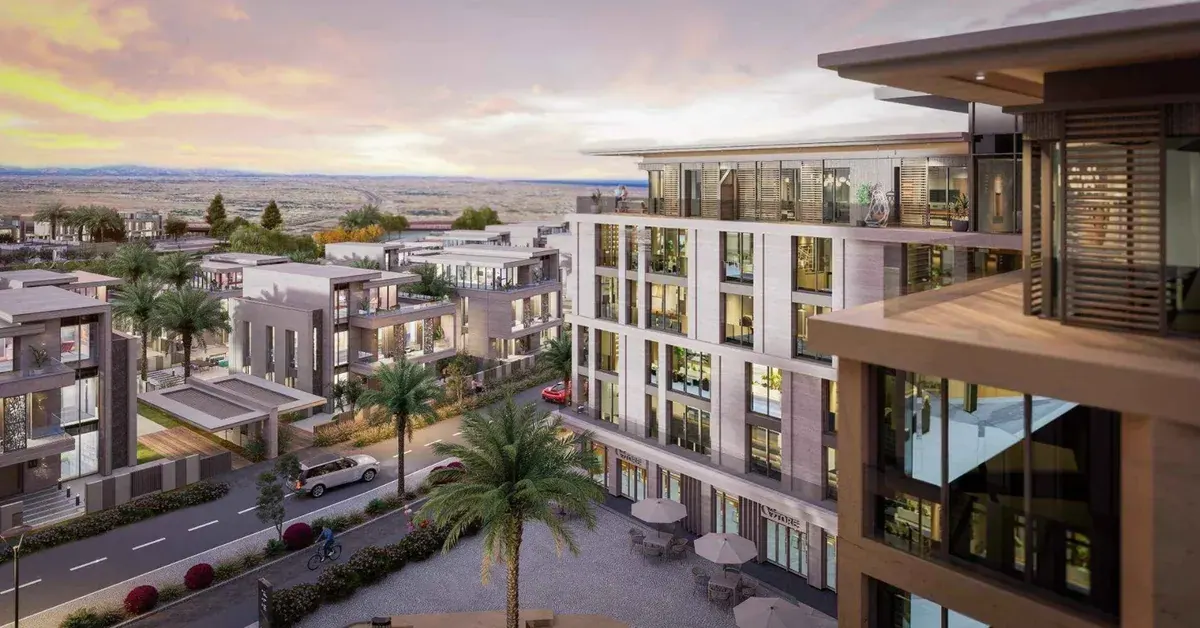
Handover years below are those announced by developers for projects on Homelist [8]. For launch dates and the wider project timeline, see new real estate projects in Oman.
- Al Mouj: Golf Links, Jinan Island and Bellevue in 2027; further phases of Azura in 2028 and 2029
- Muscat Bay: LUMA Residences in 2027
- Yiti: The Sustainable City – Yiti in 2027; AIDA in 2028
- Sultan Haitham City: Sarooj Oasis in 2028
- Jebel Sifah: Olive Farms by Raya in 2028
- Salalah: Lubana Island at Hawana Salalah in 2028

What the 2027 outlook means for buyers and investors
- Judge each property on its own evidence. National averages mix land, homes and commercial property; compare a unit with recent listings in the same community. See property prices in Oman.
- Underwrite rents with new supply in mind. Where several projects hand over in 2027, assume more competition for tenants [8].
- Stress-test short-stay income. Use 2026 occupancy, not pre-conflict levels, as the cautious case [12].
- Ask your bank how repricing works. The policy rate rose in 2026; check the fixed period and the margin before you commit [4].
- For off-plan, verify before paying. The executive regulation is still pending, so the contract and escrow checks carry the weight [13].
- Plan for 2028 tax if you are a high earner. Take advice on how the new personal income tax applies to you [16].
How we build and update this outlook
- Data. Transaction, price, population and credit figures come from NCSI publications based on Ministry of Housing and Urban Planning records [1][2]. Nine-month totals are summed from NCSI's cumulative figures.
- Statements. IMF projections, analyst comments and developer announcements are attributed and dated; they are not Homelist's views.
- Interpretation. Where we infer, we say "our reading". We do not publish price forecasts.
- Updates. This page is reviewed every month after the NCSI bulletin and whenever a scheduled event in the calendar occurs; the date at the top shows the latest check.
Conclusion
Oman enters 2027 with resilient sale values, a record pipeline, higher policy rates and a tourism sector waiting for calm. The outcome turns less on any single number than on how the regional conflict, lending rates and the 2027 handovers play out together. Watch the monthly data rather than headlines.
For the full numbers, read our Oman property market report, compare property prices in Oman, explore the Invest in Oman hub — or talk to our team about a specific community.
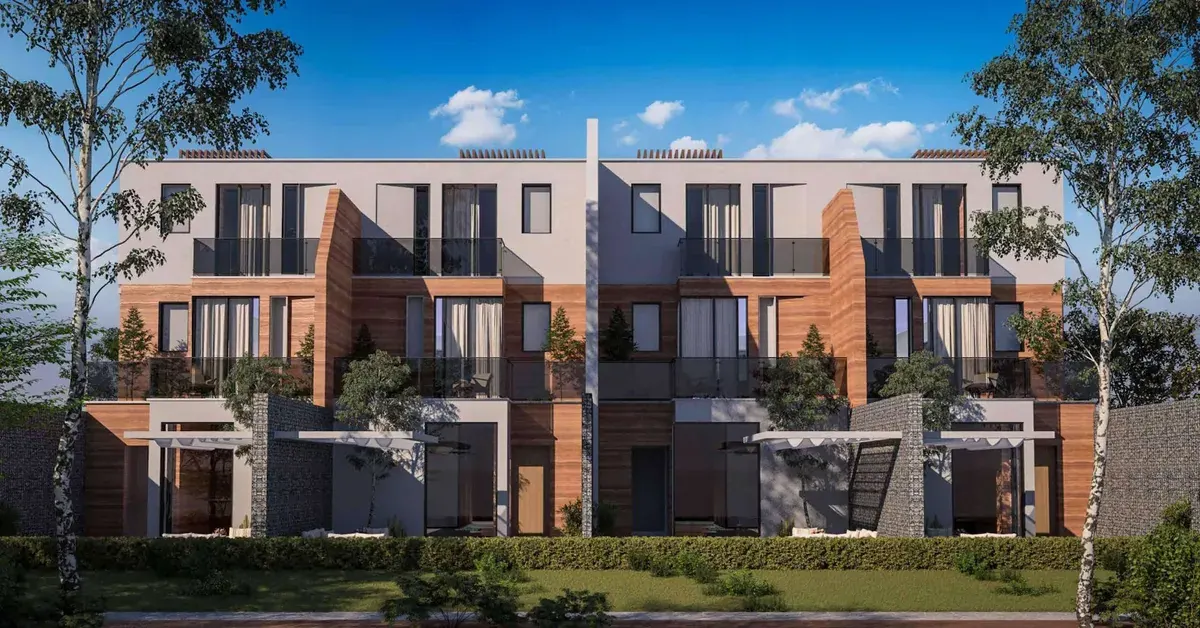
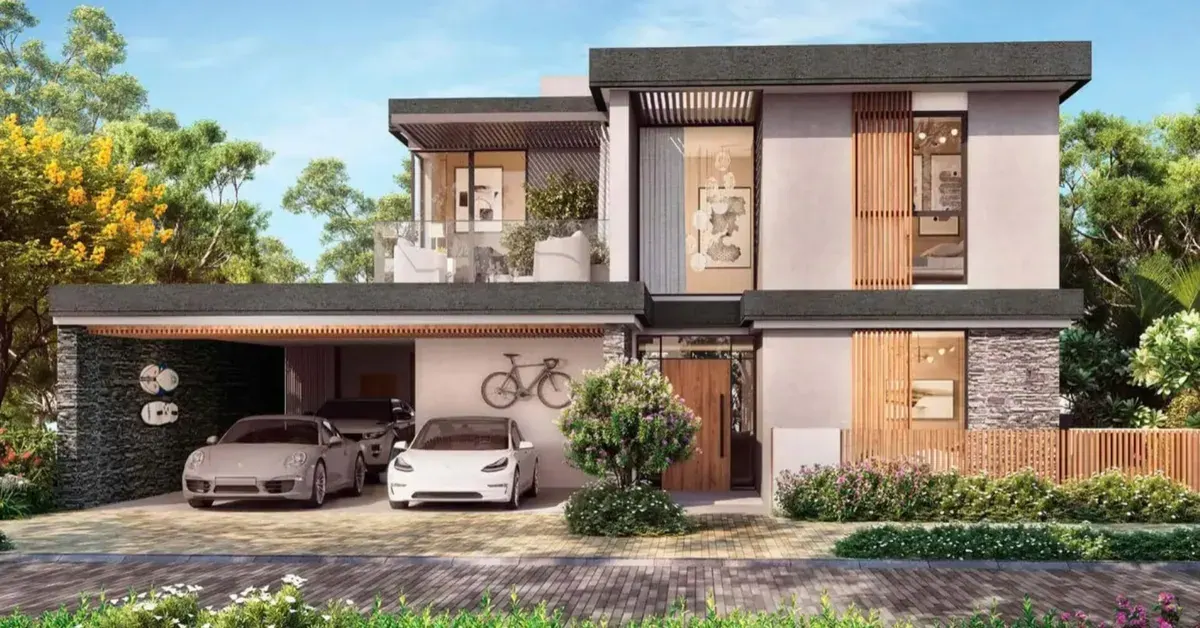

Sarooj Construction
Sarooj Oasis, Sultan Haitham City
Sultan Haitham City, Muscat
- Handover
- 2028
Frequently asked questions
What is the outlook for Oman real estate in 2027?
Homelist does not forecast prices. Our base-case scenario, as of November 2026, is continued demand for higher-value properties, more rental supply from 2027 handovers and a tourism recovery that depends on the regional conflict ending. Stronger and weaker scenarios depend mainly on the conflict, interest rates and how fast new launches sell.
Will property prices in Oman rise in 2027?
No reliable published forecast exists. The official price index rose 22.7% in the year to Q2 2026, but mostly because of land. Home prices depend on the community and on new supply, so compare specific units rather than relying on national averages.
How much did Oman's property market trade in 2026?
Registered transactions reached OMR 2,331.5 million in January–September 2026, 0.7% less than a year earlier, while the value of sale contracts rose 15.9%, according to NCSI data.
How many new projects will be completed in Oman in 2027?
There is no official national count. Of the off-plan projects listed on Homelist, developers announce handover in 2027 for six, including projects in Al Mouj, Muscat Bay and Yiti, and six more in 2028.
What does the IMF expect for Oman's economy?
In June 2026 the IMF projected growth of about 3.7% in 2026 and 3% in 2027. In October 2026 it raised the 2026 figure to 4.1%, noting that Oman had not been affected by the disruption to the Strait of Hormuz.
Are interest rates rising in Oman?
The Central Bank of Oman raised its repo rate to 4.5% in September 2026, its first increase since 2023. The average rate on bank credit in August 2026 was still lower than a year earlier.
Does Oman's new income tax affect property buyers?
Oman's personal income tax of 5% on income above OMR 42,000 a year starts on 1 January 2028. How it applies to individual buyers and their income should be checked with a tax adviser.
How often is this outlook updated?
Every month at the same address, after the National Centre for Statistics and Information publishes its monthly bulletin, and when a scheduled event such as the off-plan executive regulation occurs.
Last verified: 17 November 2026: NCSI transaction data to the end of September 2026, the Q2 2026 price index, IMF projections, central bank and tourism data, developer and analyst statements and Homelist's project database checked against the sources below. This outlook is updated every month at the same address.
This outlook is general information, not investment advice. Scenarios describe what could happen under stated conditions; they are not forecasts, and Homelist does not publish a price forecast. Figures are provisional official data or attributed third-party statements. Take independent advice before buying.
Sources
- NCSI — Monthly Statistical Bulletin, October 2026 (published 20 Oct 2026): real estate activity to end-September 2026, credit, hotels, population
- NCSI — Real Estate Price Inflation Report, Second Quarter 2026 (published 26 Aug 2026, provisional)
- NCSI — Consumer Price Inflation Report, October 2026 (published 12 Nov 2026)
- Oman Observer (17 Sep 2026) — CBO raises repo rate in first hike since 2023
- IMF (15 Jun 2026) — IMF staff concludes staff visit to the Sultanate of Oman: projections for 2026 and 2027
- Alhurra (23 Oct 2026) — IMF Regional Economic Outlook, October 2026: Oman 4.1% growth in 2026; GCC contraction and 2027 rebound assumptions
- Times of Oman (18 Aug 2026) — ITC developments across Oman at an all-time high, says expert (Ihsan Kharouf, Savills)
- Homelist project database — developer-announced handover years of listed off-plan projects (observed 17 Nov 2026)
- Gulf Construction (29 Sep 2026) — Sultan Haitham City: first residents expected in Hay Al Wafaa by end-2026
- Oman Observer (27 Sep 2026) — Oman to deliver 700 new hotel rooms by year-end (Cavendish Maxwell: pipeline and occupancy)
- Oman Observer (5 Oct 2026) — Urbanism and housing expo opens with RO 1 bn in deals
- Oman Observer (29 Oct 2026) — Tourism holds firm with 2.5m visitors amid regional instability
- Royal Decree 79/2025 issuing the Real Estate Regulation Law — Art. II (executive regulation within one year), Art. IV (entry into force) (decree.om)
- Trowers & Hamlins (Jul 2026) — Oman's new Real Estate Register Law (RD 56/2026), in force 18 May 2026
- Oman Observer (25 Jun 2026) — Oman updates property-linked visas and residency rules (ROP Decision 87/2026)
- Gulf News (22 Jun 2025) — Oman to impose first personal income tax for high earners, effective January 2028 (RD 56/2025)
- Times of Oman (14 Nov 2026) — Value of real estate transactions in Oman tops OMR2.3bn